


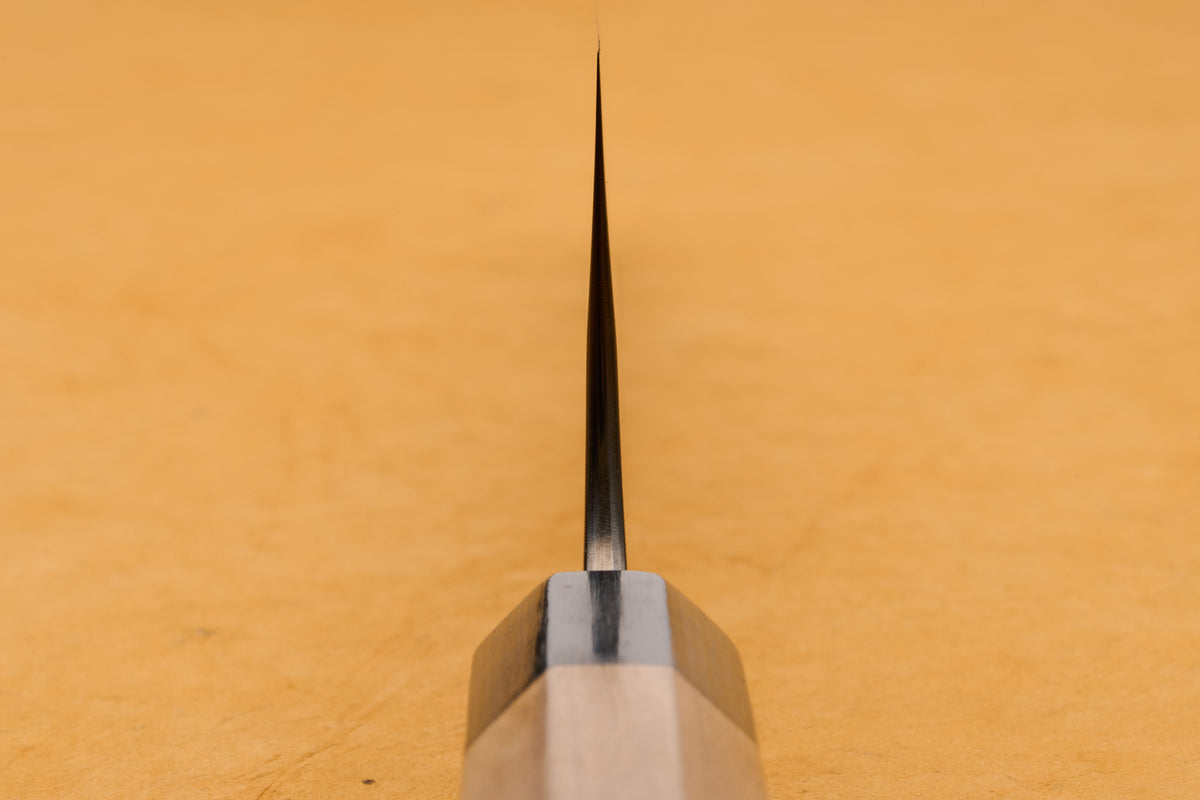
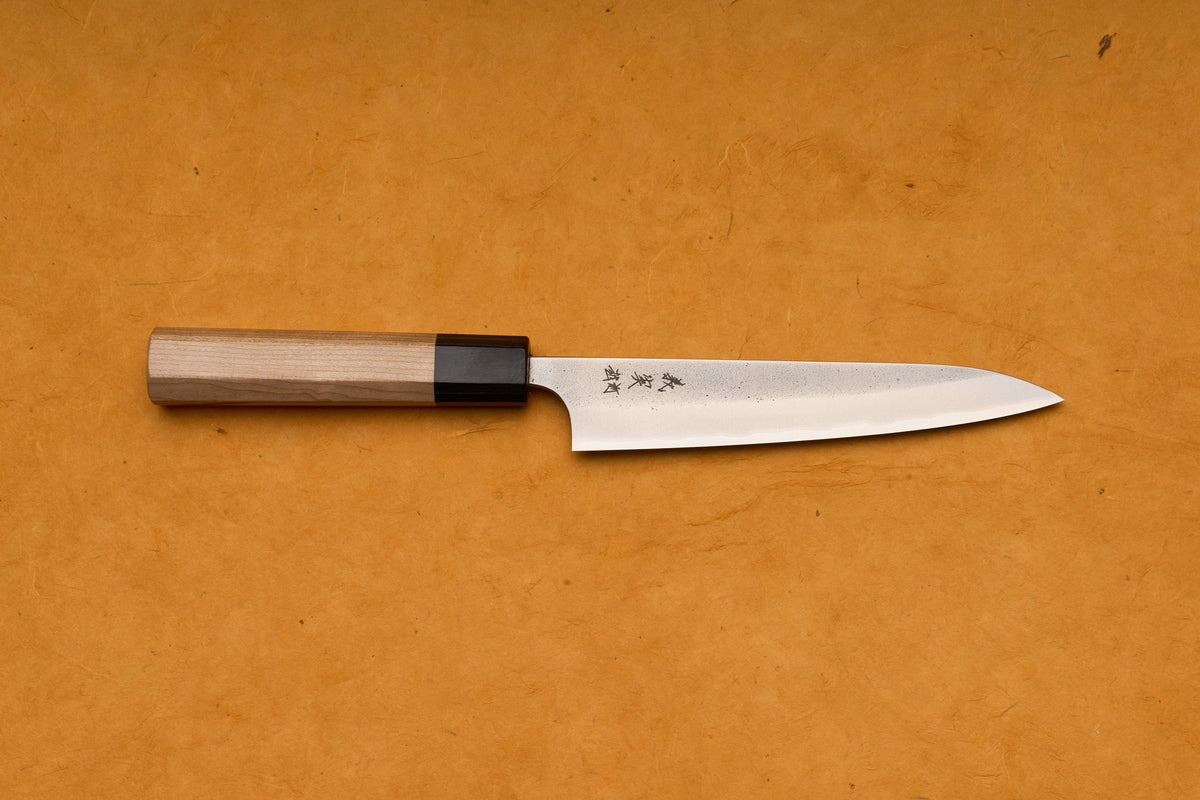
Yoshimi Kato AS/S Nashiji Gyuto 240mm
Yoshimi Kato AS/S Nashiji Gyuto 240mm
3 $ de frais de livraison pour toute commande de plus de 100 $ au Canada.
| MOINS DE 100 $ | PLUS DE 100 $ |
|---|---|
| 15 $ | 3 $ |
Ce couteau sera disponible lors de notre vente d'entrepôt du printemps de Knifewear, le samedi 9 mai à 8 h (heure des Rocheuses).
Vous ne savez pas ce qu'est la vente d'entrepôt ? Cliquez ici pour en savoir plus.
VOIR LA GAMME COMPLÈTE ICI
Les prix actuels reflètent les prix de vente finaux
Impossible de charger la disponibilité du service de retrait
À propos de Yoshimi Kato - Les secondes carrières sont souvent les meilleures. Je connais un chef épuisé, par exemple, qui possède maintenant quelques magasins de couteaux. Puis il y a Yoshimi Kato, qui a quitté son emploi de chef de projet dans une entreprise de construction pour devenir forgeron après avoir épousé la fille de Hiroshi Kato.
Normalement, il faut aux apprentis 10 à 15 ans pour devenir des professionnels, mais Kato-san y est parvenu en seulement 5 ans, et dirige maintenant l'entreprise. Il forge la plupart des couteaux Masakage Kiri, Yuki et Koishi qui étaient autrefois le domaine de son beau-père. Kato-san apporte également un niveau de professionnalisme et d'attention très spécial aux commandes de ses clients, s'assurant que chaque lame finie répond pleinement à ses normes de qualité rigoureuses.
À propos de la forme : Inspiré par le profil d'un couteau de chef européen traditionnel, le Gyuto est un couteau polyvalent avec une légère préférence pour la découpe de viande. "Gyuto" se traduit par "épée de vache". Si vous voulez un couteau pour tout faire, c'est celui-ci. Commençant à 180 mm, les Gyutos peuvent atteindre la longueur ridiculement longue (et impressionnante) de 370 mm. Pour le cuisinier à domicile ou professionnel, nous recommandons un Gyuto mesurant entre 210 mm et 270 mm de long.
| Shape | Gyuto |
|---|---|
| Maintenance Level | |
| Blade Length | | |
| Blade Height | |
| Thickness |
3,6 mm /
1,5 mm
ⓘAbove the Heel / 1cm from the tip.
|
| Weight | |
| Steel Type | |
| Dureté Rockwell | 63 - 64 |
| Edge/Bevel | |
| Handle | Manche de style japonais (Wa) - Octogone |
| Knife Line | Yoshimi Kato |
| Blacksmith | Yoshimi Kato |
| Made in | Echizen, Fukui, Japan |
Une note sur les mesures : Les couteaux japonais faits à la main peuvent varier dans leurs dimensions, ces mesures ne sont donc qu'un exemple.
Knife Care
Knife Care
Additional Details
Additional Details
SKU: YKAAS/SNSJA240GY
Expédition et retours
Expédition et retours
Chez Knifewear, nous nous engageons à expédier votre commande dans un délai d'un jour ouvrable. En cas de retard, nous nous efforcerons de vous en informer et de vous donner un délai.
Nous offrons la livraison à 3 $ pour toute commande de plus de 100 $* partout au Canada et de 200 $* pour les clients aux États-Unis. Nous livrons partout dans le monde et proposons des tarifs actualisés de notre partenaire d'expédition DHL.
*Les grils Konro et certains autres articles plus volumineux sont exclus de l'offre de livraison gratuite.
Comment puis-je retourner une commande en ligne?
Pas de soucis, nous avons ce qu'il vous faut. Rendez-vous sur https://knifewear.com/returns et suivez les instructions.
Puis-je récupérer ma commande en bordure de trottoir / en magasin?
Absolument, tant que tous les articles que vous recherchez sont en stock à l'emplacement où vous souhaitez les récupérer, vous pourrez sélectionner cette option à la caisse. Si un ou plusieurs articles ne sont pas disponibles à l'emplacement de votre choix, nous serons heureux de vous les expédier.
Request Additional Info
Request Additional Info




Consultés récemment
 | |
|---|---|
| General Info | |
Shape Sometimes a knife go by different names, depending on the region it is from. We've tried to list them all here.
|
Gyuto
|
Handle Type |
Manche de style japonais (Wa)
|
Steel Type |
|
Cladding Steel |
|
Edge/Bevel |
|
Maker |
Yoshimi Kato
|
Length |
|
Region |
Echizen, Fukui, Japan
|
| Stats for the Knifenerds For those who love to deep dive, we got you. We find for many people this is too much information, and not always helpful in deciding on the right knife for you. But we wanted to create a safe place for you consume your statistical needs. |
|
Spine Thickness above the Heel |
|
Blade Height above the Heel |
|
Weight |
|