


Sakai Takayuki
"Perfect knife to me for every day use . Thanks"
Vous possédez un compte ?
Connectez-vous pour payer plus vite.

3 $ de frais de livraison pour toute commande de plus de 100 $ au Canada.
| MOINS DE 100 $ | PLUS DE 100 $ |
|---|---|
| 15 $ | 3 $ |
Impossible de charger la disponibilité du service de retrait
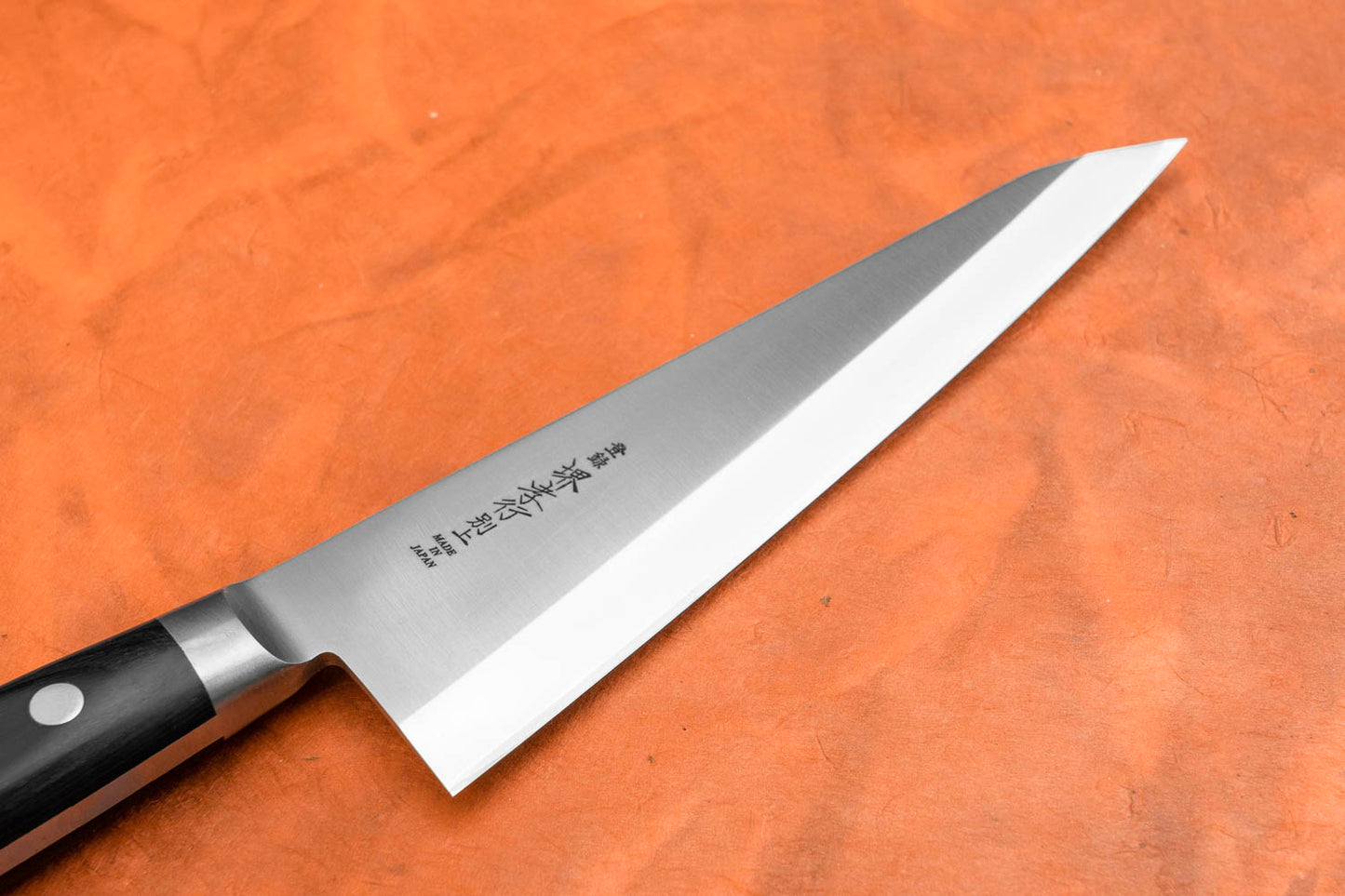
À propos de la forme : Le Garasuki est un couteau désosser japonais épais, lourd et à simple biseau. Initialement conçu pour la volaille et les petits animaux comme les lapins, il excelle également dans la boucherie d'animaux beaucoup plus gros et le filetage de poisson. Il ne faut pas forcer ce couteau à travers l'os, mais il est parfait pour couper le cartilage et les tendons.
Ce couteau est pour droitier.
À propos de Sakai Takayuki : Sakai Takayuki est bien connu comme le plus grand fabricant de couteaux de Sakai. L'entreprise héberge de nombreux forgerons et artisans qui travaillent ensemble pour créer une vaste gamme de couteaux. Bien que la région de Sakai soit traditionnellement spécialisée dans les lames à simple biseau, Sakai Takayuki fabrique de nombreuses formes différentes.
À propos de la gamme de couteaux : La série SK4 de Sakai Takayuki est la porte d'entrée parfaite vers les couteaux en acier à haute teneur en carbone pour les cuisiniers amateurs et les chefs professionnels. Le manche de style européen leur confère une prise en main confiante et familière pour les cuisiniers occidentaux, tandis que la lame en acier au carbone coupe comme une folle ! Nous aimons cette gamme pour les professionnels car ils sont super performants mais plus robustes et moins ostentatoires que certains de nos couteaux plus sophistiqués.
| Shape |
Garasuki
Also know as?
You could also call it a
Honesuki,
Boning Knife,
depending on what part of Japan you are in.
|
|---|---|
| Maintenance Level | |
| Blade Length | | |
| Blade Height | |
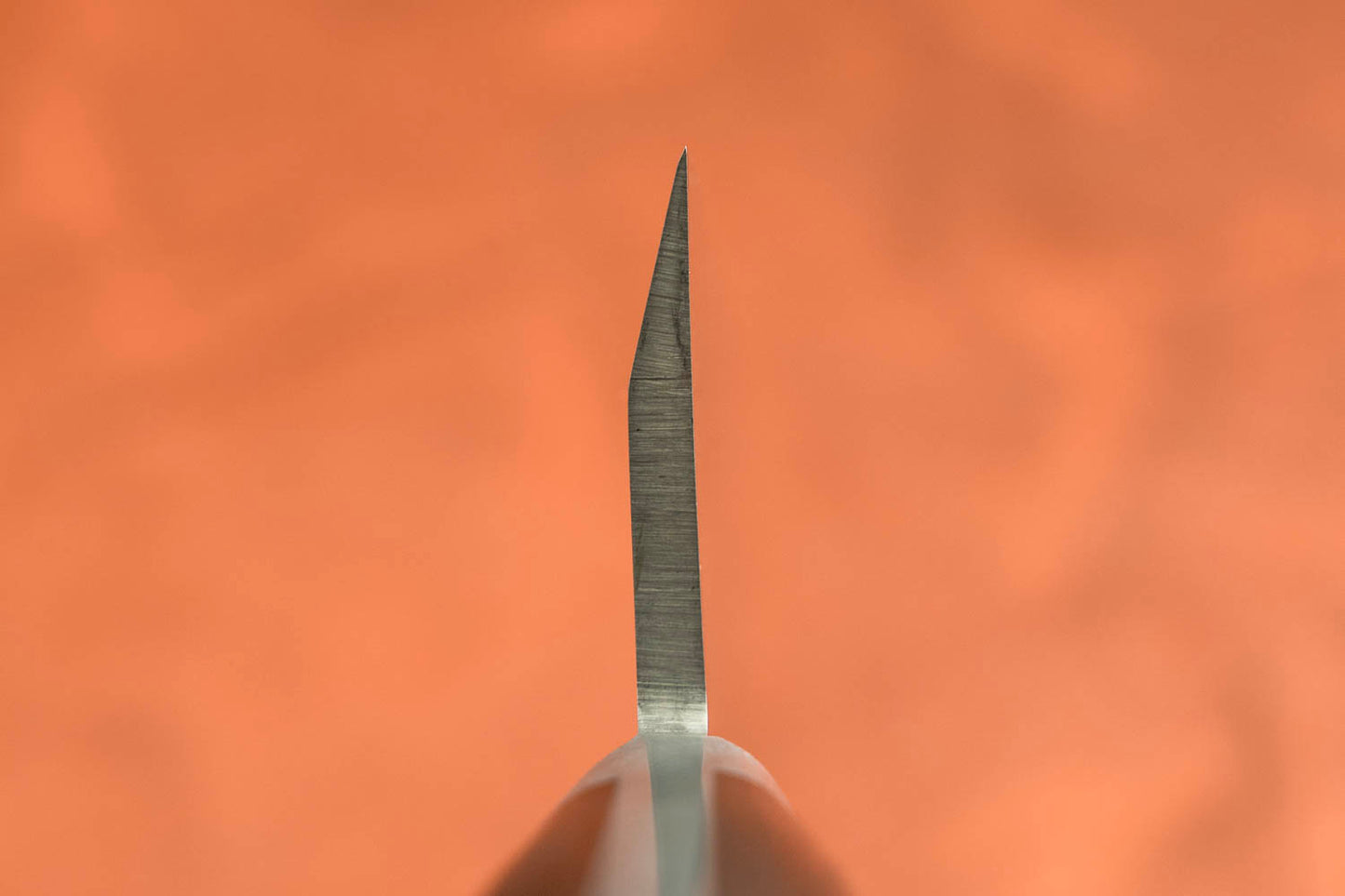
| Thickness | 4,7 mm |
| Weight | |
| Steel Type | |
| Dureté Rockwell | 58 - 59 |
| Edge/Bevel | |
| Handle | Poignée de l'Ouest - POM (Polymère plastique) Mitre métallique |
| Knife Line | Sakai Takayuki SK4 |
| Brand | Sakai Takayuki |
| Made in |
Chez Knifewear, nous nous engageons à expédier votre commande dans un délai d'un jour ouvrable. En cas de retard, nous nous efforcerons de vous en informer et de vous donner un délai.
Nous offrons la livraison à 3 $ pour toute commande de plus de 100 $* partout au Canada et de 200 $* pour les clients aux États-Unis. Nous livrons partout dans le monde et proposons des tarifs actualisés de notre partenaire d'expédition DHL.
*Les grils Konro et certains autres articles plus volumineux sont exclus de l'offre de livraison gratuite.
Comment puis-je retourner une commande en ligne?
Pas de soucis, nous avons ce qu'il vous faut. Rendez-vous sur https://knifewear.com/returns et suivez les instructions.
Puis-je récupérer ma commande en bordure de trottoir / en magasin?
Absolument, tant que tous les articles que vous recherchez sont en stock à l'emplacement où vous souhaitez les récupérer, vous pourrez sélectionner cette option à la caisse. Si un ou plusieurs articles ne sont pas disponibles à l'emplacement de votre choix, nous serons heureux de vous les expédier.

Overall rating: 4.75 / 5 from 4 reviews.
Review topics: [].
"Perfect knife to me for every day use . Thanks"
"I have broken down several birds and a small pig with this beast of a knife. It is a little heavier than I am used to wielding , but the balance is good. The customer experience buying this was top shelf."
"Big chunk of steel for absolutely demolishing poultry, works decent on other proteins and will do double duty as a baby deba for smaller fish if you're breaking those down. SK4 so tough but reactive, careful until it patinates or force it early and touch up often. Ceramic rod gets it back to fighting shape pretty fast. Shaped like a single bevel but without an ursasuki, so it's a microbevel on the backside. Honestly good value in a big format if you don't mind monosteel."
"Nice and sturdy knife, perfect for handling meat or fish. The only thing is that it’s pretty heavy, so you need to be comfortable with that !"