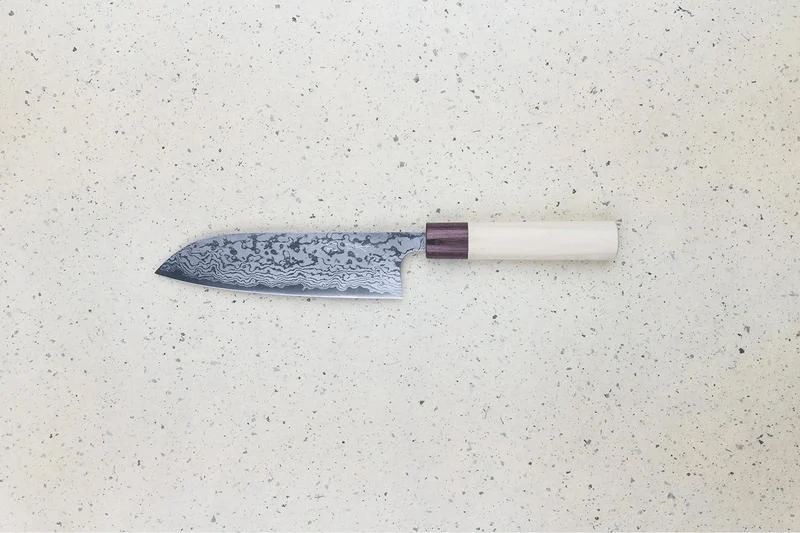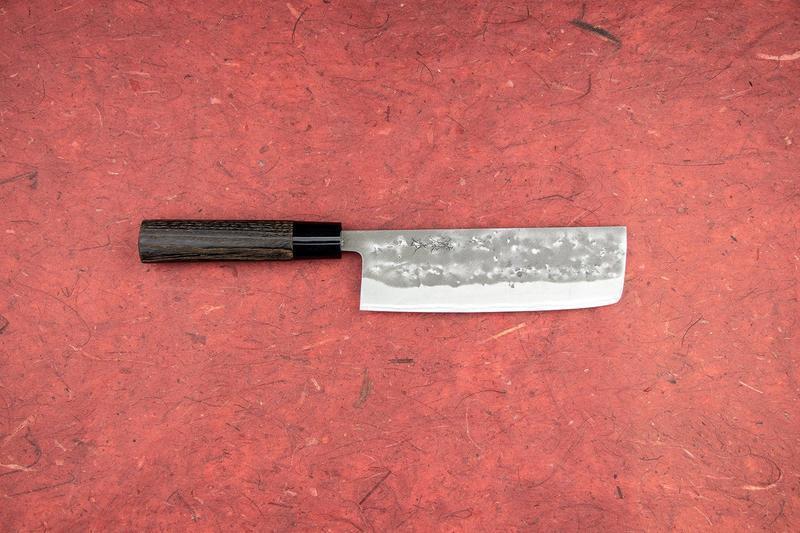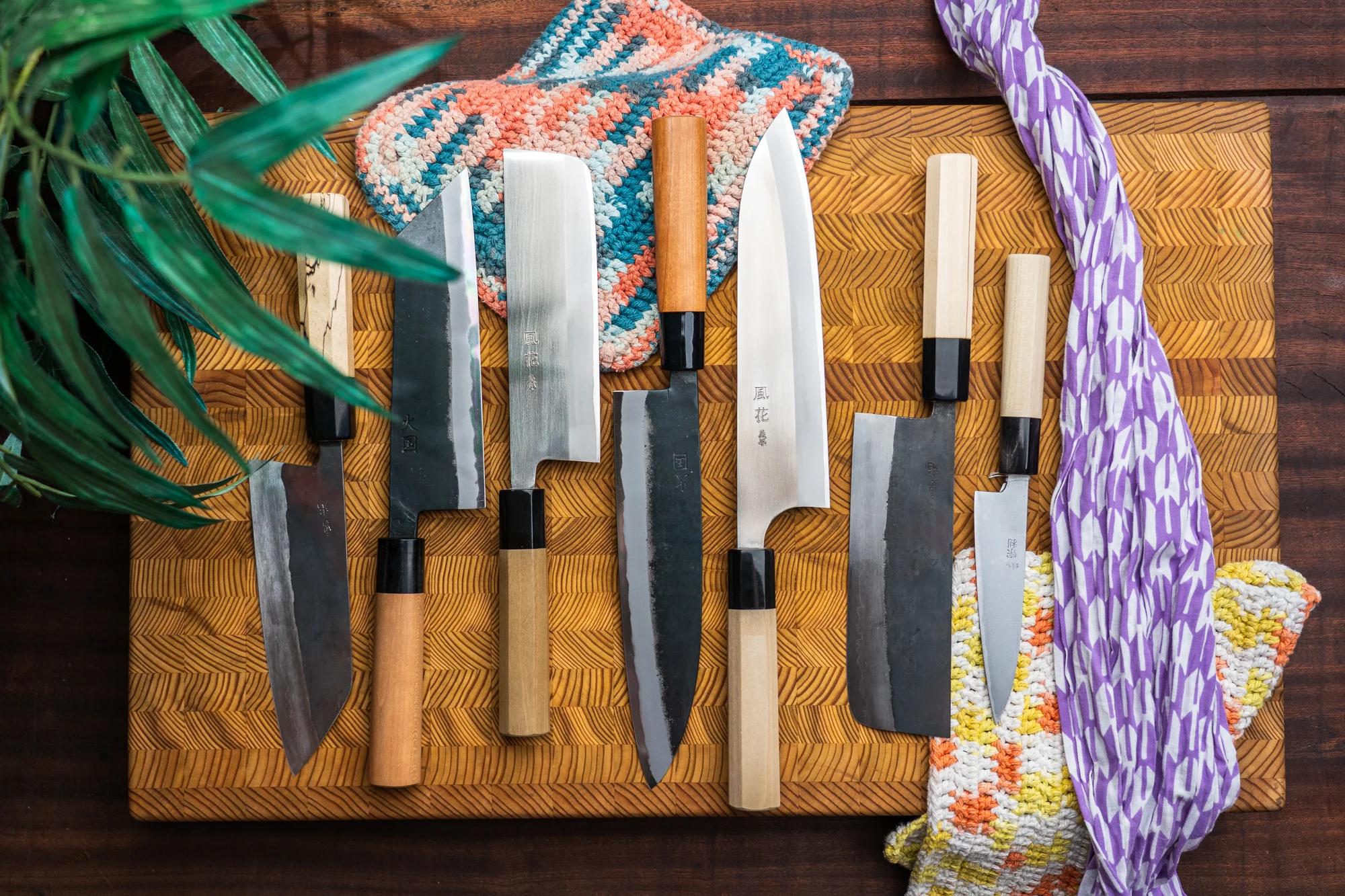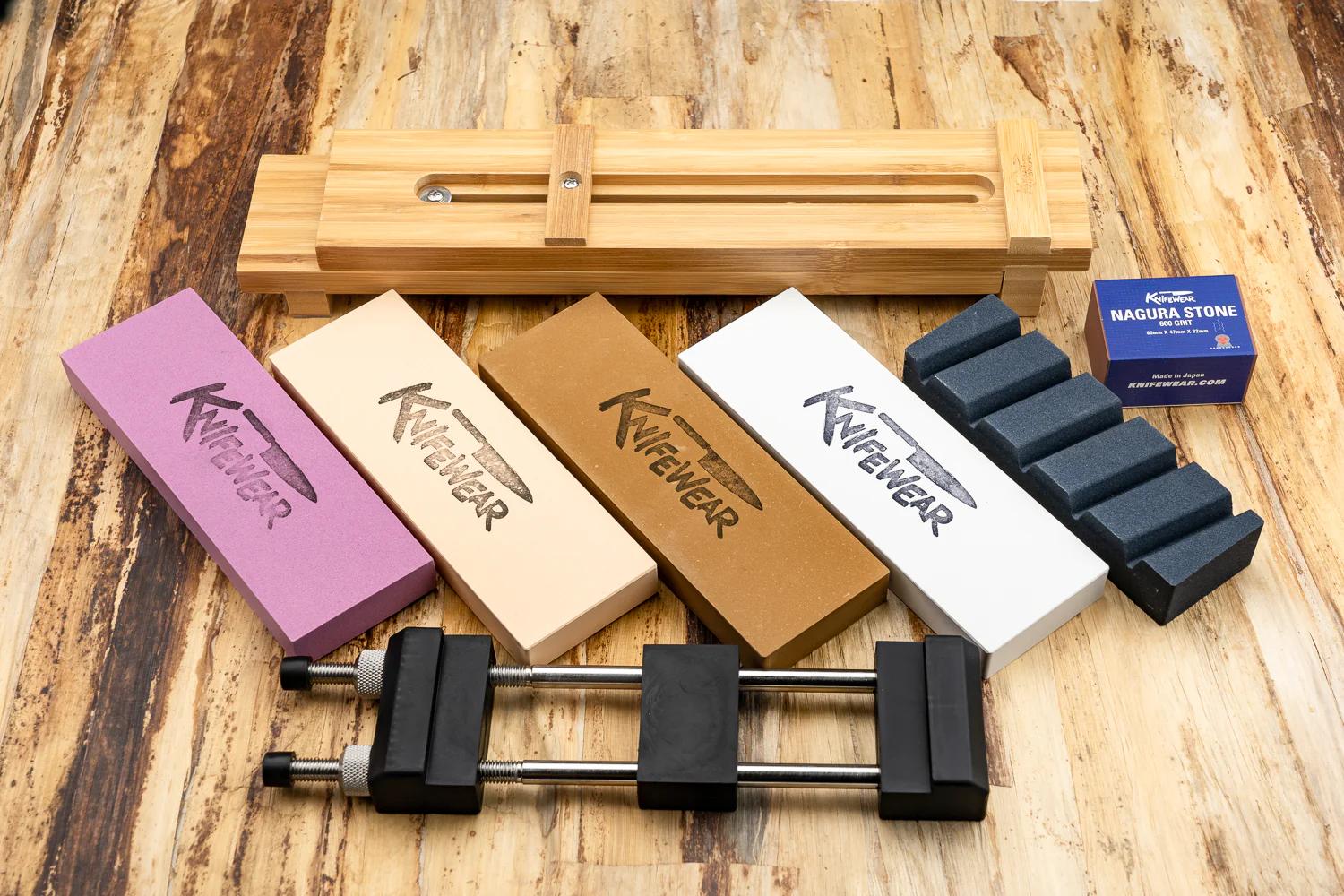
Japanese Knife Brands, Workshop by Workshop

Knifewear Guide · knifewear.com/japanese-knife-brands

Japanese Knife Brands, Workshop by Workshop

Every Japanese knife carries the mark of the workshop that forged it. Here's how to tell one smith's steel from another — and find the workshop that fits your kitchen.

2007 Knifewear founded, Calgary
5 Workshops profiled here
200,000+ Knives placed with cooks

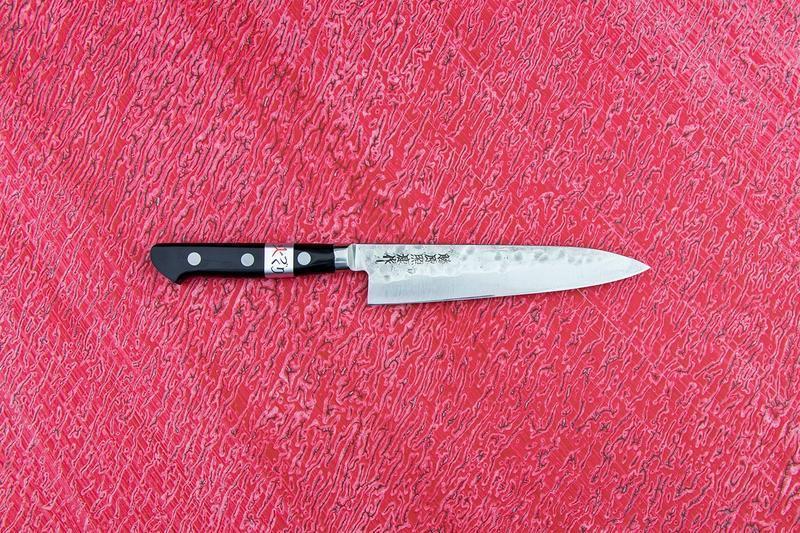
What Makes Japanese Knife Brands UniqueDiscover the Kiri Knife

Regional Traditions

Regional Traditions

Japan's knife towns grew up around local geology and guild history — Sanjo and Tsubame in Niigata built their name on hardware forging, Sakai in Osaka traces back to swordsmiths, and Echizen in Fukui has forged blades for 700-plus years. A brand's home region says as much about its knives as its logo does.

Handmade Production

Handmade Production

Most workshops are small — a handful of smiths, sometimes one family, hand-forging and finishing blades in batches rather than on a line. That's why two knives from the same series can feel a little different in hand, and why a popular profile can sell out for months.

Steel Specialization

Steel Specialization

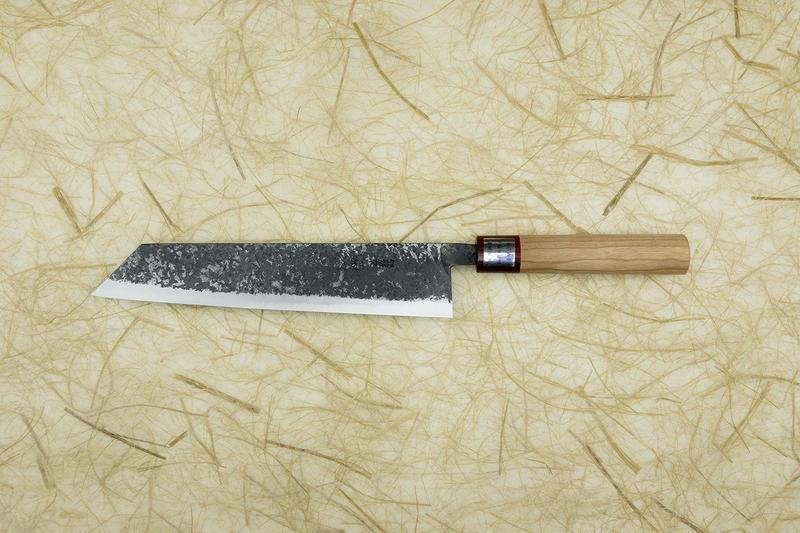
Instead of one all-purpose alloy, workshops build a reputation around specific steels — a rustic carbon steel for edge feel, a powdered stainless like SG2 for low-maintenance hardness, or a laminated construction pairing a hard core with a forgiving jacket.

The directory

Popular Japanese Knife Brands

A running list of the workshops we carry most and what they're known for. Full profiles link out below — the rest are on their way.

Brand registry — updated as new profiles publish

Brand Region Known For Profile
Masakage Masakage Region Takefu, Fukui Known for Hand-forged knives Jump to profile ↓
Takamura Takamura Region Echizen, Fukui Known for SG2 steel knives Jump to profile ↓
Yoshikane Yoshikane Region Sanjo, Niigata Known for Workhorse knives Jump to profile ↓
Tojiro Region Niigata Known for Factory-forged value lines Profile coming soon

Brand profiles

Get to Know Each Workshop

Yoshikane

Yoshikane

Sanjo, Niigata, Japan
Sanjo-style grindCarbon steel

Yoshikane blades come out of Sanjo, one of Japan's oldest hardware-forging towns. The workshop is known for a flatter "Sanjo-style" grind that favors control over a delicate taper, finished in a tough, easy-to-sharpen carbon steel. It's a workhorse line, built for cooks who sharpen often and don't baby their tools.

Takamura

Takamura

Echizen, Fukui, Japan
SG2 powdered steel

Takamura built its name on SG2, a powdered stainless steel that holds an edge far longer than most carbon alternatives while still taking a genuinely sharp finish. It's the line we point to most for cooks who want Japanese-knife performance without carbon-steel upkeep.

Masakage

Masakage

Takefu, Fukui, Japan
Hand-forged

Masakage knives are hand-forged in small batches in Takefu, with each series finished by a different smith — so the line covers a wide range of grinds and steels under one name. It's a natural next step for a cook who's outgrown a factory knife and wants to feel the difference handwork makes.

Choose yours

Choosing a Knife Brand

Artisan vs. Factory

Factory lines prioritize consistency — every knife performs the same, at a lower price. Artisan workshops trade some of that consistency for character, and often a sharper stock edge, because you're paying a smith rather than a machine.

Choosing a Knife Brand

Every tier below is still hand-picked by our buyers

Price Tiers

$80 – $160 Everyday

Factory-forged, stainless steel, low maintenance — a solid first Japanese knife.

$160 – $350 Step-Up

Small-workshop forged, a mix of carbon and powdered steels, noticeably sharper out of the box.

$350+ Collector

Named smiths, hand-finished details, limited runs — bought as much for the maker as the blade.